How Often Should Offices in Brooklyn Center, MN Be Professionally Cleaned?
Choosing the right office cleaning schedule helps businesses in Brooklyn Center, MN maintain a professional workspace without paying for unnecessary services or allowing dirt to build up between visits. The ideal frequency depends on office size, employee numbers, customer traffic, restroom usage, and the condition of shared spaces. Some offices benefit from daily cleaning, while others may only need professional service a few times a week or weekly. Understanding the available schedules helps businesses develop a practical cleaning routine that matches their facility's everyday needs.
Daily Office Cleaning
Daily professional cleaning is often a practical choice for busy offices with frequent visitors, multiple employees, shared restrooms, and heavily used break rooms. These areas can accumulate trash, fingerprints, food debris, and dirt throughout the workday.
Daily cleaning may include emptying trash bins, cleaning restrooms, wiping appropriate surfaces, vacuuming carpets, mopping hard floors, and maintaining reception areas and common spaces.
For Brooklyn Center businesses with high foot traffic, daily service helps address routine messes before they accumulate. It can be particularly useful for facilities that welcome customers or visitors throughout the day.
Office Cleaning Three Times a Week
Cleaning three times a week can provide a balance between regular maintenance and cost management. For example, a business might schedule professional cleaning on Monday, Wednesday, and Friday to keep its workplace maintained throughout the week.
This schedule may suit offices with moderate activity that need consistent attention but do not generate enough daily mess to require service every evening.
Restrooms, break rooms, entrances, and high-traffic floors should be evaluated to determine whether they remain presentable between visits. If these areas become dirty quickly, the business may need more frequent service or additional attention to specific tasks.
Weekly Office Cleaning
Weekly cleaning can work well for smaller offices with limited employee numbers, relatively low visitor traffic, and fewer shared facilities.
A weekly visit may include dusting accessible surfaces, vacuuming carpets, sweeping and mopping floors, emptying trash, cleaning restrooms, and maintaining common areas.
However, some everyday responsibilities still need attention between professional visits. Employees should clean up spills, dispose of food waste, and keep shared spaces orderly. If the office becomes difficult to maintain over the course of the week, increasing the cleaning frequency may be worthwhile.
Biweekly Office Cleaning
Biweekly cleaning generally means scheduling professional service every two weeks. This arrangement may suit low-traffic offices or businesses that already handle basic daily upkeep internally.
Professional visits can focus on selected tasks such as detailed dusting, floor maintenance, restroom cleaning, and areas that gradually accumulate dirt.
Biweekly service may not be sufficient as the only cleaning arrangement for busy offices with frequently used restrooms, shared kitchens, or regular customer visits. Businesses should assess the condition of the facility between visits before choosing this schedule.
Monthly Cleaning and Periodic Deep Cleaning
Monthly cleaning can provide additional attention to areas that do not need professional service as frequently. Depending on the building, tasks might include detailed cleaning of baseboards, corners, fixtures, and selected low-use areas.
Deep cleaning is different from routine office maintenance because it focuses on areas that need more detailed work. This may include floor edges, accumulated grime, neglected fixtures, and more thorough cleaning of restrooms or break rooms.
Some businesses schedule deep cleaning monthly or seasonally while maintaining a separate routine for everyday tasks. This combination can help address both regular cleaning needs and areas that require additional attention.
Consider Employee Numbers and Daily Foot Traffic
The number of people using an office is one of the most important factors when selecting a cleaning schedule. A small office with a few employees generally produces less waste and experiences less wear than a busy workplace with many staff members and regular visitors.
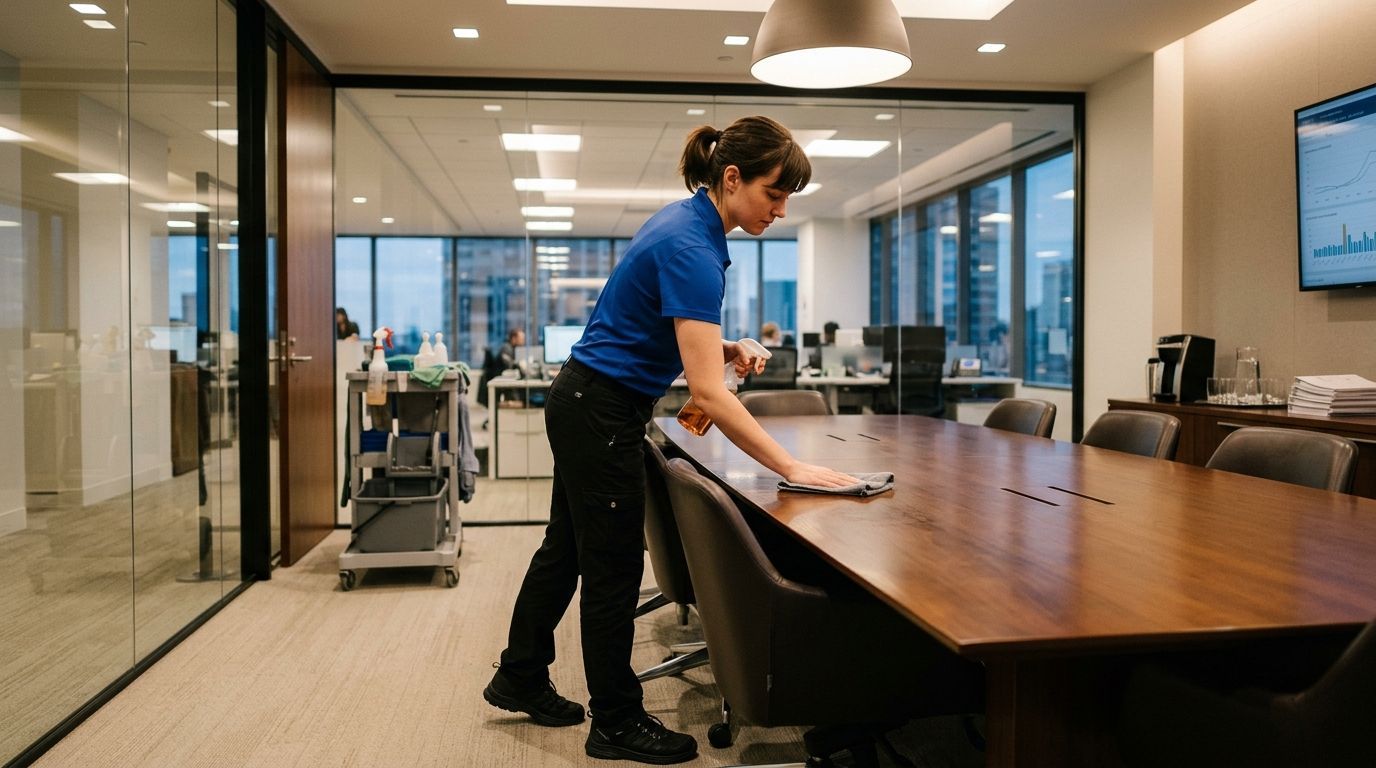
Reception areas, corridors, conference rooms, and shared workstations may require more frequent cleaning because multiple people use them throughout the day.
Businesses should also consider how the office is used. An office that hosts frequent meetings or customer appointments may need more attention than a workplace where employees spend most of their time at individual desks.
Restrooms and Break Rooms May Need More Frequent Attention
Not every area of an office becomes dirty at the same rate. Restrooms and break rooms often require more frequent cleaning than private offices or storage areas because they receive repeated use.
Restroom maintenance may include cleaning toilets, sinks, counters, mirrors, floors, and frequently touched fixtures. Break room cleaning may involve wiping appropriate surfaces, managing trash, and addressing food debris around shared eating areas.
Even if an office receives professional cleaning only a few times per week, businesses can establish additional procedures for maintaining these shared spaces between visits.
Account for Minnesota's Seasonal Cleaning Challenges
Seasonal conditions can influence how frequently an office needs floor and entrance maintenance. During Brooklyn Center's winter months, employees and visitors may track snow, slush, moisture, and road salt into the building.
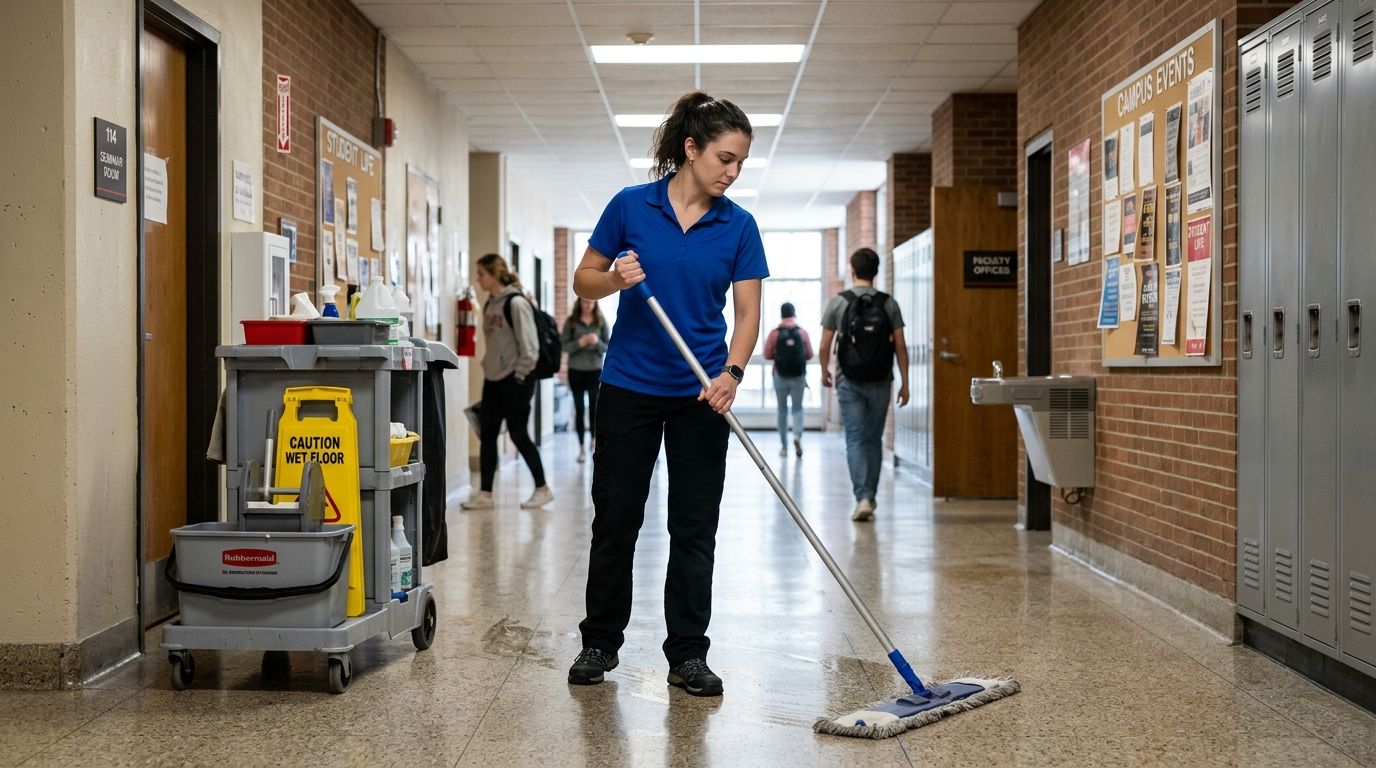
Entrances, hallways, and hard floors can require more frequent sweeping and mopping during these periods. Effective entrance mats and prompt attention to tracked-in debris can also help manage everyday messes.
Businesses may benefit from adjusting their cleaning plans during winter rather than using the exact same schedule throughout the year. The goal is to match service frequency to the actual condition of the facility.
How to Choose the Right Office Cleaning Schedule
Before selecting a schedule, Brooklyn Center businesses should review several practical considerations:
- The number of employees and daily visitors
- The size and layout of the office
- The number of restrooms and how frequently they are used
- The condition of break rooms and shared spaces
- The type of flooring throughout the facility
- The amount of dirt entering through exterior doors
- The availability of employees to handle basic upkeep
- The business's operating hours and preferred cleaning times
After reviewing these factors, a business can decide whether daily, three-times-a-week, weekly, biweekly, or periodic deep cleaning is appropriate. The schedule can be adjusted as staffing, building usage, and seasonal conditions change.
Professional Office Cleaning in Brooklyn Center, MN
Brooklyn Center Commercial Cleaning provides professional cleaning solutions for offices and commercial facilities in Brooklyn Center, MN. Services can help maintain workspaces, restrooms, break rooms, entrances, floors, and shared areas according to the needs of each facility.
Whether your office needs daily cleaning, service three times a week, weekly maintenance, janitorial services, or periodic deep cleaning, a customized plan can help keep the workplace presentable and manageable.
Choosing the right cleaning frequency helps businesses address everyday messes, maintain shared spaces, and keep routine facility maintenance from becoming an ongoing distraction for employees