What Does a Commercial Cleaning Company Actually Handle?
From office floors and restrooms to breakrooms and high-touch surfaces, discover the cleaning tasks professional commercial cleaners can manage to keep your workplace clean, organized, and welcoming.
Keeping a commercial property clean involves more than emptying trash bins and wiping down desks. Offices and business facilities have different cleaning needs, and maintaining them requires regular attention to floors, restrooms, shared spaces, and frequently touched surfaces.
For many business owners, hiring a professional commercial cleaning company is a convenient way to maintain a clean and presentable workplace without assigning everyday cleaning responsibilities to employees.
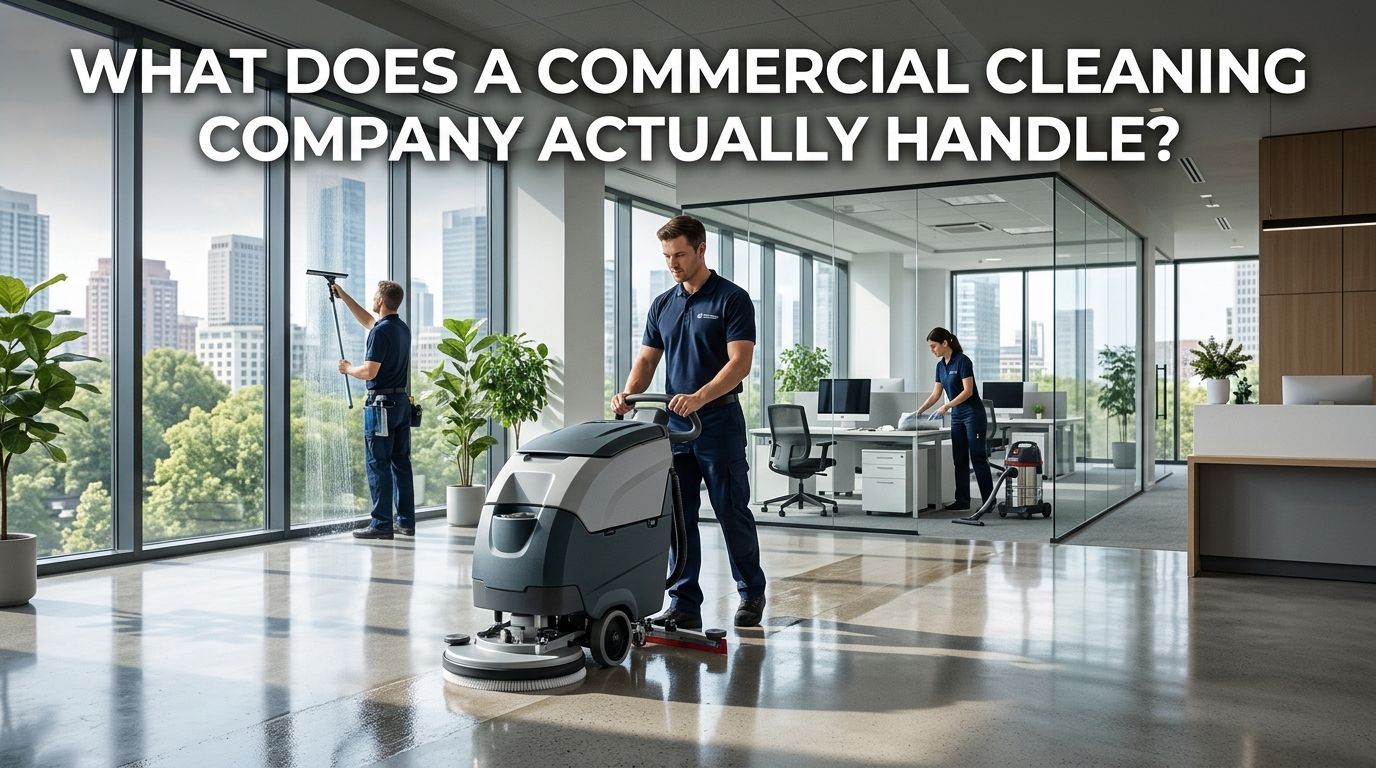
But what does a commercial cleaning company actually handle? Understanding the services available can help you decide which cleaning tasks your business needs and how often they should be performed.
1. General Office and Workspace Cleaning
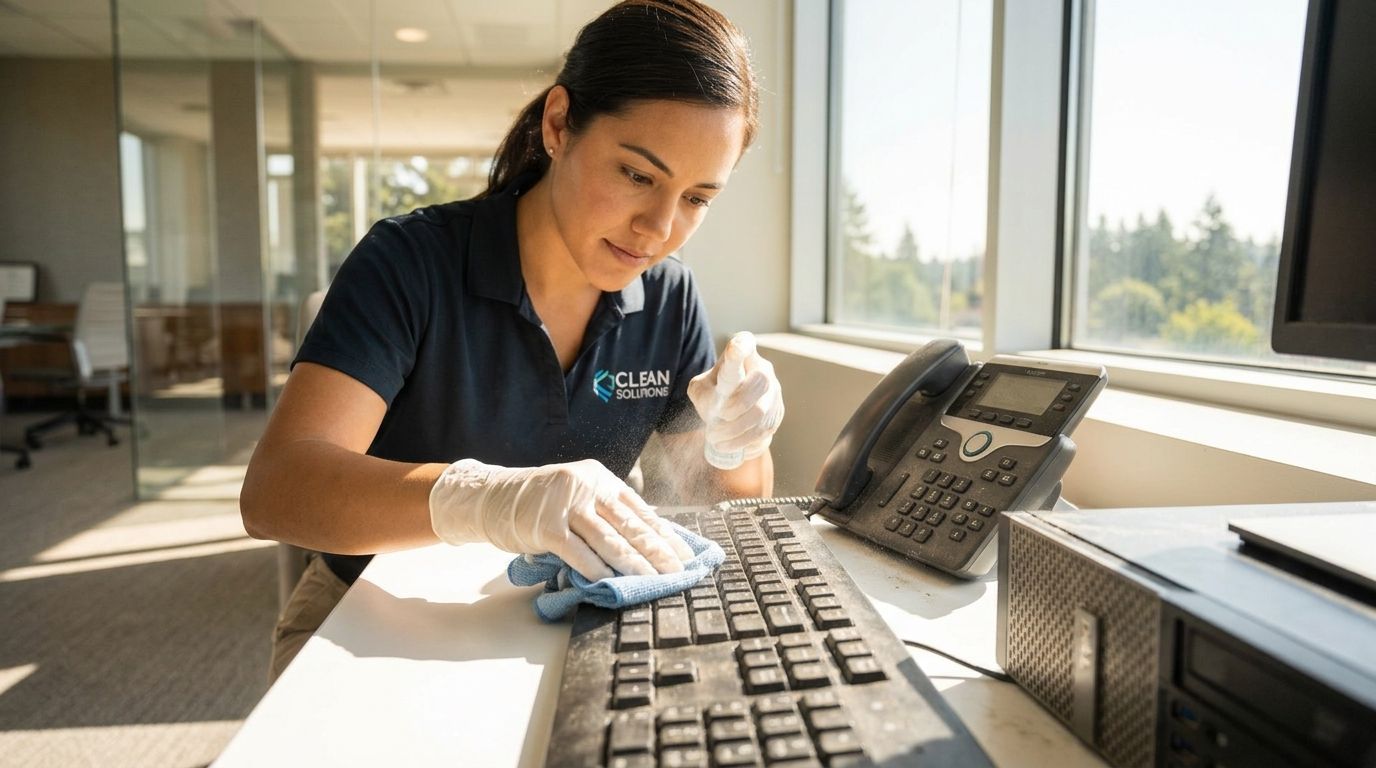
Office spaces can accumulate dust, dirt, fingerprints, and everyday clutter. Professional cleaners help maintain a tidy environment so employees and visitors can enjoy a more comfortable workspace.
General office cleaning may include:
- Dusting desks, shelves, and accessible surfaces
- Wiping tables and shared workstations
- Cleaning reception areas and conference rooms
- Removing trash and replacing bin liners
- Cleaning interior glass surfaces and partitions
- Sweeping, vacuuming, and mopping floors
Regular attention to these areas helps maintain a professional appearance throughout the workplace.
2. Restroom Cleaning and Sanitation
Restrooms are among the most frequently used areas in commercial buildings. Without regular cleaning, dirt, unpleasant odors, and buildup can quickly become noticeable.
Commercial cleaning services may include:
- Cleaning and disinfecting toilets and urinals
- Scrubbing sinks and countertops
- Cleaning mirrors and fixtures
- Mopping restroom floors
- Emptying trash bins
- Cleaning frequently touched surfaces
- Restocking toilet paper, soap, and paper towels when included in the service
A consistent restroom cleaning routine helps maintain a more comfortable and hygienic facility for employees and visitors.
3. Breakroom and Kitchen Cleaning
Breakrooms and office kitchens are shared spaces where employees prepare food, eat meals, and take breaks. These areas need regular attention because food spills, crumbs, and grease can accumulate throughout the week.
Typical breakroom cleaning tasks may include:
- Wiping countertops and tables
- Cleaning sinks and faucets
- Wiping exterior surfaces of appliances
- Cleaning cabinet handles and frequently touched areas
- Sweeping and mopping floors
- Emptying trash bins
- Removing visible food spills and residue
Keeping these shared spaces clean encourages employees to enjoy a more pleasant place to take their breaks.
4. Floor Cleaning and Maintenance
Commercial floors experience constant foot traffic, which can bring in dust, dirt, moisture, and debris. Different flooring materials also require different cleaning methods.
Depending on the type of flooring and agreed service, professional cleaners may handle:
- Sweeping and mopping hard floors
- Vacuuming carpets and rugs
- Cleaning entryways and high-traffic areas
- Removing visible dirt and debris
- Spot cleaning suitable carpeted surfaces
- Arranging deeper floor care when needed
Proper routine maintenance helps keep floors looking presentable and reduces the accumulation of dirt that can affect their appearance over time.
5. Dusting Furniture and Accessible Surfaces
Dust can settle on desks, shelves, furniture, window sills, and other surfaces. Regular dusting helps keep workspaces cleaner and more comfortable.
Professional cleaners may dust:
- Desks and office furniture
- Shelves and cabinets
- Reception counters
- Window sills
- Tables and conference room surfaces
- Accessible decorative fixtures
Cleaning schedules should also account for sensitive equipment and personal belongings. Employees may need to secure important documents and clear work surfaces before cleaning.
6. Trash Removal and Waste Management
Trash removal is another important part of maintaining a clean commercial property. Overflowing bins can create unpleasant odors and make an otherwise clean office look untidy.
Commercial cleaning companies may provide:
- Emptying office trash bins
- Replacing trash liners
- Collecting waste from restrooms and breakrooms
- Removing general office waste
- Separating recyclable materials when required by the facility's procedures
Proper waste handling helps keep common areas organized and prevents trash from accumulating during business hours.
7. Cleaning High-Touch Surfaces
Certain surfaces are touched repeatedly throughout the day by employees, customers, and visitors. These areas benefit from regular cleaning and, where appropriate, disinfection.
Common high-touch surfaces include:
- Door handles and push plates
- Light switches
- Shared tables and counters
- Reception desks
- Handrails
- Shared equipment surfaces
- Frequently used restroom fixtures
Cleaning and disinfecting are not exactly the same. Cleaning removes dirt and debris, while disinfecting uses appropriate products according to label instructions to reduce germs on suitable surfaces.
The frequency of this service depends on how often the areas are used and the needs of the facility.
8. Periodic Deep Cleaning
Routine cleaning helps maintain a workplace day to day, but some areas need more detailed attention from time to time.
Deep cleaning focuses on accumulated dirt and buildup in areas that may not be covered during regular maintenance.
Depending on the facility, deep cleaning may include:
- Detailed floor cleaning
- Carpet and upholstery cleaning
- Thorough restroom cleaning
- Cleaning baseboards and corners
- Detailed breakroom cleaning
- Addressing buildup in less frequently cleaned areas
- Cleaning accessible areas behind or underneath furniture
Businesses may schedule deep cleaning periodically, during seasonal maintenance, or when preparing for an important event.
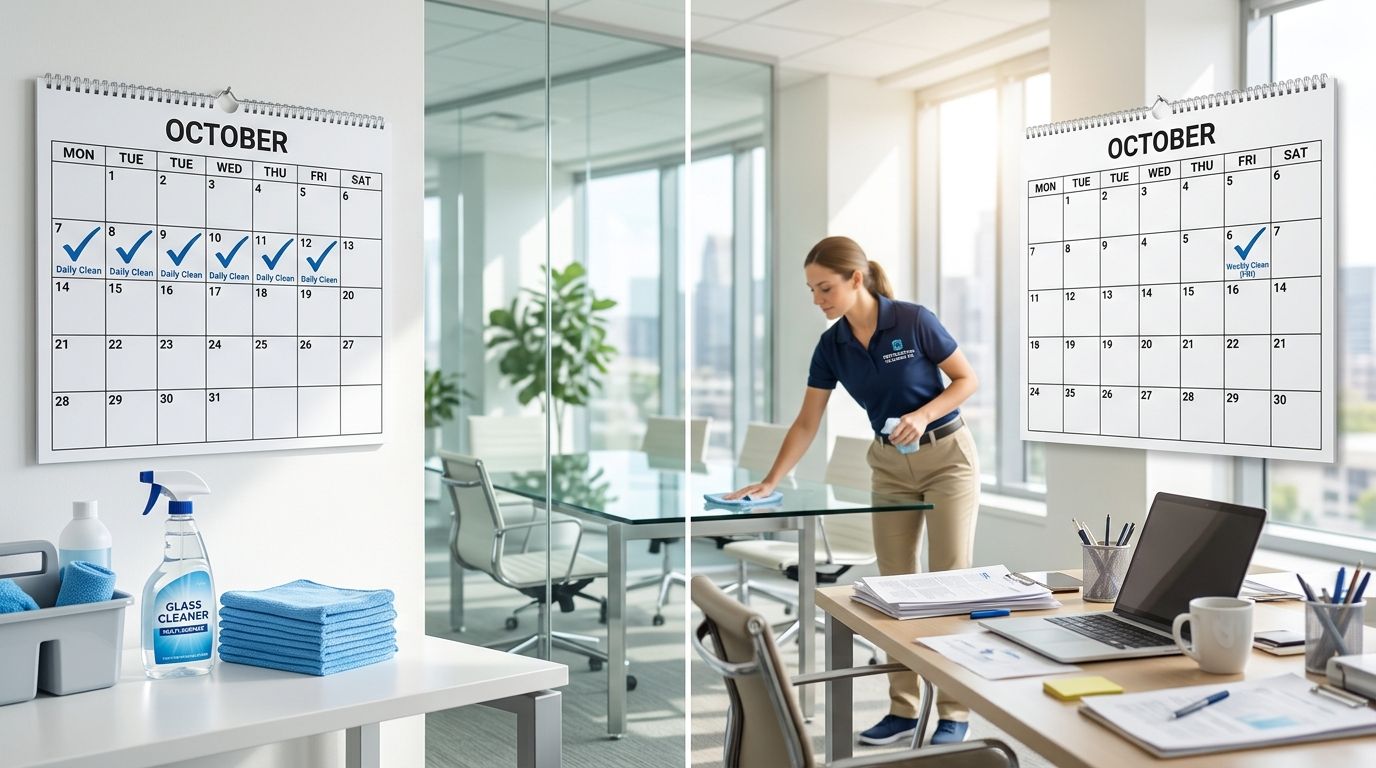
9. Customized Cleaning Schedules
Not every commercial property requires the same cleaning routine. A small office may need service a few times a week, while a busy facility may benefit from daily cleaning.
A commercial cleaning company can help businesses determine a schedule based on:
- Facility size and layout
- Number of employees
- Daily customer and visitor traffic
- Restroom and breakroom usage
- Flooring types
- Business operating hours
- Cleaning priorities and budget
A customized schedule helps ensure that important areas receive the attention they need without unnecessary service visits.
Why Businesses Hire Professional Commercial Cleaners
Professional commercial cleaning helps business owners manage the everyday demands of maintaining their facilities. Instead of relying entirely on employees to handle cleaning tasks, businesses can arrange regular service for important areas throughout the workplace.
A consistent cleaning routine can help maintain a positive impression, keep shared spaces presentable, and make facility maintenance easier to manage.
Before hiring a cleaning company, discuss your property's specific requirements, the tasks included in the service, cleaning frequency, and any special instructions for your facility.
Keep Your Brooklyn Center Business Clean and Welcoming
A clean commercial space supports a professional image and creates a more comfortable environment for employees, customers, and visitors. From routine office cleaning and restroom maintenance to floor care and periodic deep cleaning, understanding what professional cleaners handle makes it easier to choose the right service for your business.
Brooklyn Center Commercial Cleaning helps local businesses maintain clean and presentable workplaces through commercial cleaning and office cleaning services. Whether you need regular cleaning or additional attention for specific areas, contact Brooklyn Center Commercial Cleaning today to discuss your facility's needs and request a cleaning estimate.