Why Brooklyn Center Businesses Need Cleaning Plans That Can Change With the City
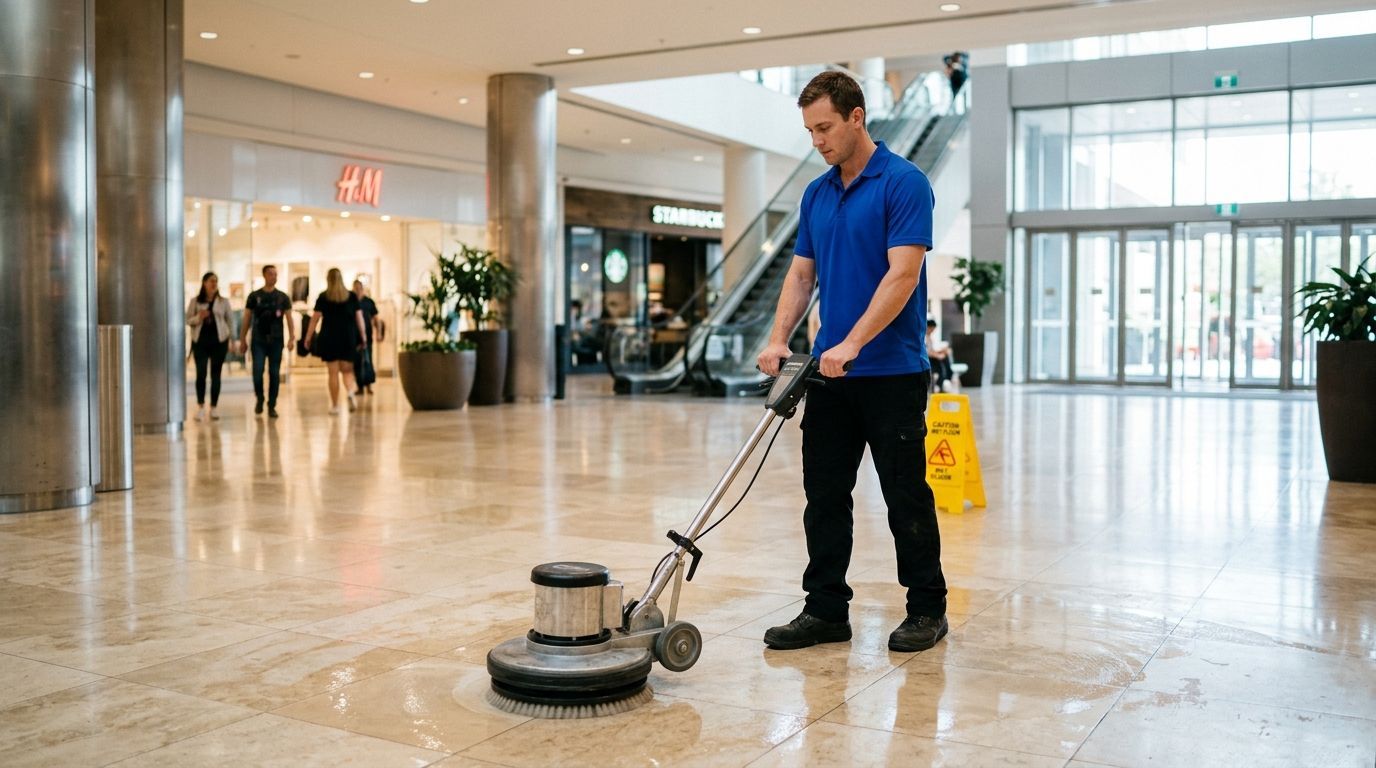
From Highway 100 and I-694 Traffic to Shingle Creek, Established Commercial Areas, and New Redevelopment, Brooklyn Center Businesses Deal With Cleaning Needs That Can Look Very Different From One Property to the Next
Brooklyn Center is in an interesting position.
It is one of the Twin Cities' first ring suburbs, just minutes from Minneapolis, with major highways running through the community. At the same time, parts of the city are being reimagined for the future, including a large redevelopment area near Shingle Creek Parkway.
That combination means you can find a longtime neighborhood business, hotel, restaurant, office building, retail property, medical facility, and a newer commercial development all within a relatively small area.
They may be close to one another, but they do not necessarily get dirty the same way.
At Brooklyn Center Commercial Cleaning, we believe a cleaning plan should fit the way people actually use the building. Traffic, employees, customers, weather, floor types, entrances, and operating hours usually tell you much more than square footage alone.
Brooklyn Center Really Is in the Middle of Everything
The city's economic development team describes Brooklyn Center as being "at the center," and geographically that makes sense.
Businesses have quick access to Highway 100, I-94 and I-694, Highway 252, Highway 169, and I-35W. The city also notes that Minneapolis is only about six minutes away and St. Paul about fifteen minutes away.
That location is convenient.
It also means plenty of people move through Brooklyn Center during a normal workday.
Employees arrive from other communities.
Customers stop in on their way somewhere else.
Delivery drivers move between businesses.
Vendors come and go.
Hotel guests head out for meetings or meals.
Every trip eventually ends at somebody's front door.
And whatever is on people's shoes comes inside with them.
The Entrance Tells You What Kind of Day It Has Been
A commercial entrance can look completely different at 4 p.m. than it did at 8 a.m.
The glass may have fingerprints.
The mat has collected dirt.
A few leaves may have made their way inside.
The floor has started showing traffic.
Then winter arrives.
Now add snow, slush, sand, and road salt.
For a busy Brooklyn Center business, the entrance often needs more attention than its small size would suggest.
Regular entrance cleaning may include:
- Vacuuming entry mats
- Mopping hard flooring
- Removing salt residue
- Cleaning glass doors
- Wiping handles and push plates
- Spot cleaning carpet
- Cleaning edges and corners
- Removing moisture and debris
The entrance does not need to look untouched.
People are supposed to walk through it.
It just needs to look like someone is keeping up with the day.
Highway Traffic Quickly Becomes Floor Traffic
Brooklyn Center's highway access is good for business, but Minnesota parking lots and sidewalks can be rough on commercial flooring.
Think about what happens before somebody reaches your lobby.
They drive through wet or snowy roads.
They park in a salted lot.
They walk across pavement.
Then they come through your door.
During a dry week in July, that might bring in a little dust.
During January, it can feel like half the parking lot came inside.
That is why entrance cleaning is often less about appearance and more about stopping dirt before it moves deeper into the building.
If salt and sand stay near the front door, the problem is manageable.
Once people track it through hallways, offices, elevators, and customer areas, there is a lot more to clean.
Brooklyn Center Is Also Planning for a Different Future
One of the most interesting things happening in Brooklyn Center is the Opportunity Site.
The approximately 80 acre area sits between Highway 100 and Shingle Creek Parkway, between Bass Lake Road and Summit Drive. The city has identified it as a major redevelopment opportunity and adopted a master plan that looks toward new housing, businesses, community spaces, parks, trails, and other uses.
That matters because commercial districts do not stay the same forever.
A property that once saw mostly daytime traffic may eventually have restaurants, residents, customers, and visitors moving through the area at different times.
New businesses open.
Existing businesses expand.
Buildings get renovated.
Traffic patterns change.
Cleaning plans need to be able to change too.
A Business Can Outgrow Its Cleaning Schedule Without Adding Any Space
This happens all the time.
A company starts with fifteen employees.
The cleaning schedule is built around fifteen people.
Then the business grows to thirty employees.
Maybe there are more customers too.
But nobody changes the cleaning plan.
Suddenly the restrooms seem harder to maintain.
The break room gets messy faster.
Trash fills more quickly.
The entrance sees twice the traffic.
The cleaner may not be doing anything differently.
The building is simply being used differently.
Every once in a while, it is worth asking:
Does our cleaning schedule still match the business we operate today?
That question can uncover problems before they become complaints.
Shingle Creek Gives Brooklyn Center Another Side
Brooklyn Center is not just highways and commercial properties.
Shingle Creek runs through the community and forms part of an important trail corridor connecting parks, neighborhoods, the community center, and other areas. The city lists 67 miles of paved paths, with the Shingle Creek Trail connecting Palmer Lake, Centennial Park, Lions Park, and other destinations.
That outdoor activity affects businesses too.
Employees go for walks during lunch.
People bike.
Families move between parks, restaurants, stores, and community facilities.
Customers cross sidewalks and trails before walking indoors.
And whatever is outside eventually comes with them.
Spring brings moisture and mud.
Summer brings dust and pollen.
Fall brings leaves.
Winter brings everything at once.
Winter Is Really About Keeping the Mess Contained
Snow itself is not always the biggest cleaning problem.
It melts.
The bigger challenge is what happens afterward.
Water spreads across hard flooring.
Sand collects in carpet.
Salt dries into white streaks.
Then someone walks through it and carries it farther down the hallway.
For Brooklyn Center businesses, winter cleaning may need extra attention around:
- Main entrances
- Employee entrances
- Entry mats
- First floor hallways
- Hard flooring
- Carpet near doors
- Salt buildup
- Wet areas
The key is catching the mess early.
Cleaning a small entrance several times is often easier than cleaning salt off half the building later.
Employee Entrances Can Be Busier Than Customer Entrances
The front lobby usually gets the most attention because customers see it.
But what about the employee entrance?
A business with fifty employees may have most of them arriving through one side or back entrance within an hour.
In winter, every employee walks across the same salted parking lot.
They enter through the same door.
Then they follow the same hallway.
You can sometimes see the exact traffic pattern on the floor.
If a cleaning plan focuses only on the customer entrance, one of the busiest areas in the building can get overlooked.
A proper walkthrough should look at every entrance people actually use.
Offices Usually Get Dirty Without Making a Big Mess
An office rarely becomes obviously dirty overnight.
Instead, little things happen.
Coffee gets spilled near the machine.
Dust settles on a windowsill.
Trash starts filling underneath desks.
The conference room table gets fingerprints.
People walk the same carpeted hallway all day.
The restroom stays busy.
None of those things feel urgent.
That is why office cleaning is mostly about consistency.
The goal is to handle small problems before enough of them collect to make the entire office feel tired.
Break Rooms Are Where a Normal Workday Leaves Evidence
The break room usually tells the truth about how busy an office is.
Coffee in the morning.
Lunch at noon.
Another cup of coffee in the afternoon.
The refrigerator door gets opened dozens of times.
Someone drops crumbs.
Water collects near the sink.
Nobody is doing anything unusual.
People are simply using the room.
Regular break room cleaning may include:
- Countertops
- Tables
- Sinks
- Appliance exteriors
- Refrigerator handles
- Cabinet pulls
- Floors
- Trash
- Frequently touched surfaces
Customers may never see the break room.
Employees see it every day.
That makes it worth taking care of.
Restrooms Should Follow the Number of People Using Them
Restroom cleaning is not really about room size.
It is about traffic.
A restroom used by eight employees may stay in good shape most of the day.
A restroom serving employees, customers, hotel guests, patients, or visitors can change quickly.
More people usually means more:
- Water around sinks
- Mirror spots
- Trash
- Supply use
- Paper on floors
- Floor cleaning
- Fingerprints
- Odor concerns
For some businesses, one thorough evening cleaning is plenty.
For others, someone should check the restroom during the day.
The people using the space should determine the frequency.
Hotels and Hospitality Properties Have Different Expectations
Brooklyn Center's highway location has long supported hotels and other businesses serving visitors to the Twin Cities.
Hospitality cleaning is different because guests often experience several parts of the property.
They walk through the entrance.
They use elevators.
They sit in the lobby.
They use public restrooms.
They move through hallways.
They may visit meeting or conference spaces.
A guest may never know who cleaned the building.
They simply expect it to feel clean.
For public areas in hospitality properties, consistency matters because the next guest can arrive at almost any time.
Retail and Customer Facing Businesses Cannot Always Wait Until Closing
A store or restaurant has a different problem from an office.
The building gets dirty while customers are watching.
A spill happens at 12:30.
The front door has fingerprints by 2.
The restroom needs attention at 3.
The trash near the entrance is full at 4.
Waiting until the nighttime cleaning crew arrives may not be good enough.
For customer facing businesses, some of the most important areas can include:
- Entrances
- Customer flooring
- Restrooms
- Waiting areas
- Glass
- Counters
- Trash
- Frequently touched surfaces
The full cleaning can happen later.
The obvious problems should be handled when they happen.
Older Commercial Buildings and New Development Need Different Attention
Brooklyn Center has established commercial properties along with areas being planned for substantial redevelopment.
Those buildings can present very different cleaning challenges.
An older building may have more ledges, corners, detailed trim, older flooring, or hard to reach areas where dust collects.
A newer commercial space may use more glass, open layouts, polished flooring, and shared spaces.
Neither one is automatically easier to clean.
They just show dirt differently.
The building itself should influence the cleaning plan.
High Touch Surfaces Are Easy to Forget
Some surfaces get used all day but never look particularly dirty.
That makes them easy to miss.
Think about:
- Door handles
- Push plates
- Light switches
- Elevator buttons
- Reception counters
- Shared equipment
- Break room appliances
- Restroom fixtures
One person touches them.
Then twenty more do.
Adding these areas to routine cleaning does not take much time, but it helps keep a building feeling well maintained.
Spring Has Its Own Cleaning Problems
Winter gets all the attention in Minnesota.
Then the snow melts.
Now parking lots are wet.
Sand that spent months hiding under snowbanks is suddenly everywhere.
Rain starts.
Mud appears.
Employees and customers track all of it inside.
So the cleaning problem changes.
January might be about salt.
April may be about mud and moisture.
July can bring more dust and pollen.
October brings leaves and damp debris.
Commercial cleaning works better when it follows the seasons instead of pretending every month is identical.
Not Every Room Needs the Same Cleaning Frequency
One of the easiest ways to waste cleaning time is to treat every room equally.
Imagine cleaning an unused conference room every night while the employee entrance needs another floor cleaning.
The checklist may look complete.
The building is not actually getting the attention where it matters most.
For many Brooklyn Center businesses, cleaning can be split into different frequencies.
Areas That Often Need Frequent Attention
- Entrances
- Restrooms
- Break rooms
- Trash areas
- Customer spaces
- High traffic floors
- Glass doors
- Frequently touched surfaces
Areas That Can Often Be Rotated
- Baseboards
- High ledges
- Air vents
- Cabinet tops
- Interior glass
- Detailed floor edges
- Low traffic offices
- High dusting
Everything still gets maintained.
It just happens when it actually needs to happen.
Local Growth Will Keep Changing How Commercial Buildings Are Used
Brooklyn Center is a fully developed first ring suburb, which means much of its future growth will come from redevelopment rather than simply expanding outward. The city specifically identifies redevelopment as an important way to create new business opportunities, housing, community amenities, and a stronger commercial tax base.
For local businesses, that means the community around them may continue changing.
New neighbors arrive.
New businesses open.
Traffic shifts.
Commercial areas become busier.
A cleaning plan that works today may need to be adjusted later.
That is normal.
Good commercial cleaning should be flexible enough to keep up.
Commercial Cleaning for Brooklyn Center, MN Businesses
Brooklyn Center combines easy Twin Cities access with established commercial areas, hotels, restaurants, offices, healthcare businesses, retail properties, neighborhood companies, and new redevelopment opportunities.
Those properties do not all need the same cleaning plan.
Brooklyn Center Commercial Cleaning provides professional commercial cleaning for offices, restaurants, medical facilities, retail businesses, financial institutions, schools, fitness centers, churches, warehouses, dealerships, hospitality properties, and other commercial facilities throughout Brooklyn Center.
A small professional office may only need cleaning several times each week.
A busy restaurant or retail property may benefit from daily service.
A larger workplace may need different cleaning frequencies for customer areas, employee spaces, and quieter rooms.
The right plan depends on what actually happens inside the building.
Frequently Asked Questions
How Often Should a Brooklyn Center Business Be Professionally Cleaned?
It depends on the type of facility, employee count, customer traffic, and operating hours. Smaller offices may only need cleaning several times per week, while busy restaurants, retail businesses, healthcare properties, hotels, and other high traffic facilities may benefit from daily service.
Does Winter Increase Commercial Cleaning Needs in Brooklyn Center?
Yes. Snow, road salt, sand, slush, and moisture can greatly increase cleaning needs around entrances and high traffic floors. Employee entrances may need just as much attention as customer entrances.
Can Commercial Cleaning Be Done After Business Hours?
Yes. Many Brooklyn Center businesses prefer evening cleaning because crews can complete most work without interfering with customers or employees.
What Areas Usually Need the Most Frequent Cleaning?
Entrances, restrooms, break rooms, customer spaces, trash areas, heavily traveled flooring, glass doors, and frequently touched surfaces usually require the most regular attention.
Can Different Parts of My Building Have Different Cleaning Schedules?
Absolutely. In many commercial properties, that is the most practical approach. High traffic spaces can receive frequent attention while quieter rooms and detailed cleaning tasks follow a rotating schedule.
Need Commercial Cleaning in Brooklyn Center?
Brooklyn Center is a city with an established past and a lot of change still ahead.
Major highways keep people moving through the community. Shingle Creek and the trail system give the city a strong outdoor side. Existing businesses continue serving customers every day while redevelopment is creating a different vision for parts of the city.
Commercial buildings have to keep up with all of it.
Employees come to work.
Customers walk through the doors.
Deliveries arrive.
Minnesota weather follows everybody inside.
Brooklyn Center Commercial Cleaning can create a cleaning schedule around the way your facility is actually used, whether that means daily service, several visits per week, or different cleaning frequencies throughout the building.
A good cleaning plan does not need to make your business look untouched.
It just needs to make the property feel cared for every time someone walks through the door.